Physicians' Back Institute
Joint Pain Doctors & Specialist Care
San Francisco
Healthy Joints Depend on Healthy Function
Most people think of joints as simple hinges that wear out over time. While aging certainly produces changes in cartilage and bone, healthy joint function depends on far more than the joint itself. Muscles, tendons, ligaments, nerves, posture, movement patterns and even neighboring joints all influence how well a joint performs.
At Physicians’ Back Institute, we believe that understanding these relationships is essential to accurately diagnosing and treating joint pain.

Common Causes of Peripheral Joint Pain
Shoulder, hip, knee, ankle and other peripheral joint problems are among the most common reasons people seek medical care. Arthritis is frequently blamed for these symptoms, yet many individuals with significant arthritis experience little discomfort, while others with minimal arthritic changes suffer substantial pain. This illustrates an important principle: structural abnormalities do not always determine how a joint functions. The structural deformity of scoliosis itself rarely causes pain.
For this reason, our evaluation extends beyond imaging studies alone. X-rays and MRI scans provide valuable information about anatomy, but they do not reveal how the body moves. A comprehensive physical examination often identifies mechanical dysfunction that contributes to pain, but may not appear on imaging.
Where Joint Pain Originates
Joint pain frequently originates from areas outside the painful joint itself.
Hip pain may arise from the lumbar spine or pelvis. Shoulder pain may be influenced by the neck, ribs or posture. Knee pain may develop because of altered mechanics in the hips, ankles, or feet.
Looking only at the symptomatic joint can overlook these important contributing factors.

Our Approach to Joint Pain
As board-certified medical doctors with extensive training in osteopathy, we evaluate the body as an integrated system. Through careful hands-on examination, we assess joint mobility, muscle balance, posture, gait, and the interactions between different regions of the musculoskeletal system. This broader perspective often provides insights that help explain persistent symptoms and guide more effective treatment.
Treatment is individualized rather than standardized. Depending on the diagnosis, recommendations may include osteopathic manual treatment, therapeutic exercise, strengthening, flexibility training, posture and ergonomic correction, activity modification, proliferative regenerative injections, or collaboration with other specialists. The objective is not simply to relieve pain, but to restore efficient movement and improve long-term function.
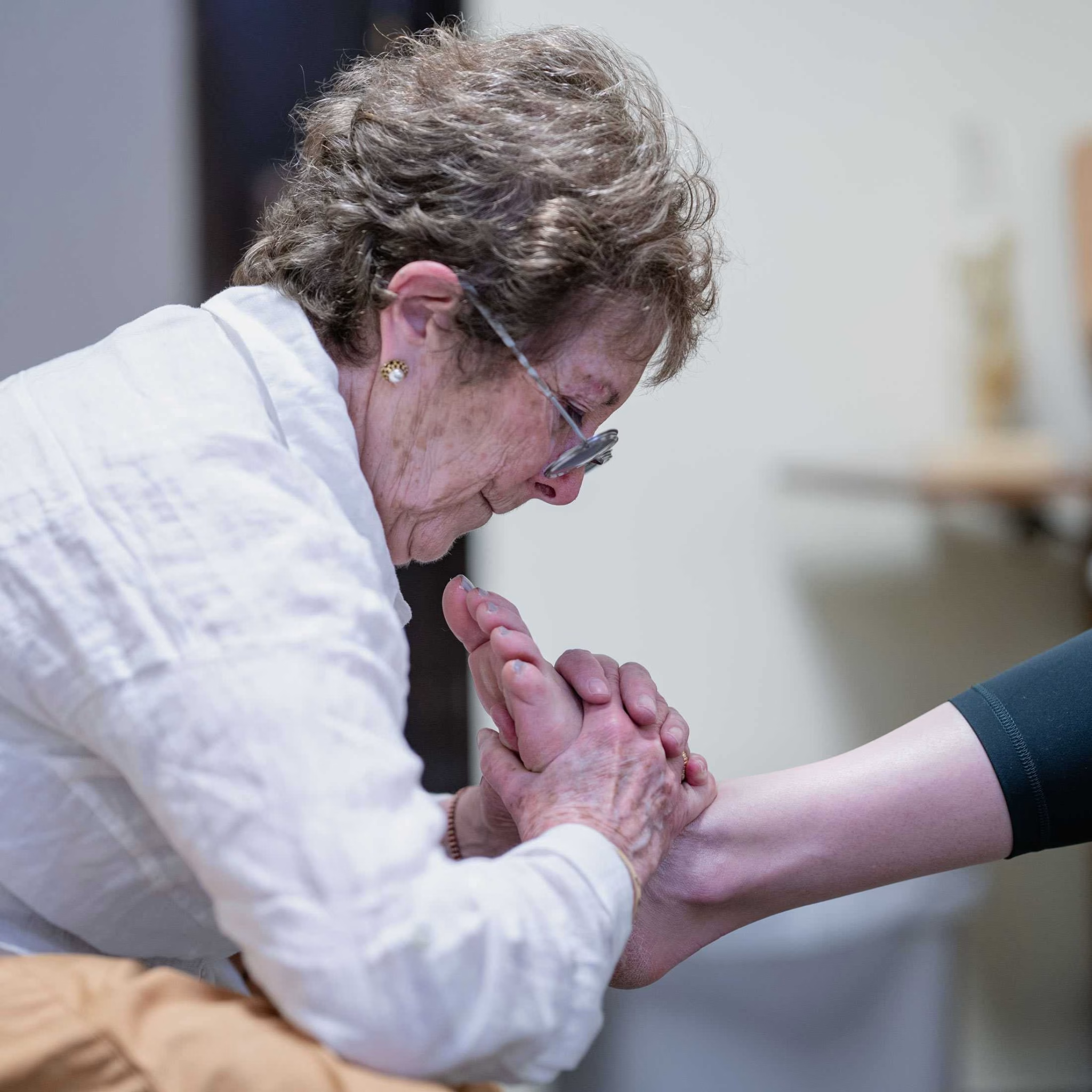
We also emphasize patient education. Understanding why a joint hurts and how daily movement patterns contribute to symptoms allows patients to participate actively in their recovery. Small changes in posture, body mechanics, or exercise technique can often produce meaningful improvements over time.
At Physicians’ Back Institute, our philosophy is simple: successful joint care begins with a precise diagnosis and a comprehensive understanding of how the entire musculoskeletal system functions. By identifying the underlying cause of joint pain rather than focusing solely on imaging findings, we help patients move more comfortably, function more efficiently, and return to the activities they enjoy.