A Fall Is Rarely Just a Fall
Why Listening to a Patient's History is Essential to Finding the Root Cause of Symptoms
A fall can seem like a relatively minor event. You land hard on your left buttock, for example. Nothing is broken. There is no major injury, and over the next several weeks you seem to recover.
Then something unexpected happens.
Six or eight weeks later, pain develops in the right buttock. Sitting becomes uncomfortable. You begin walking with a slight limp. Sleep is interrupted.
Because the pain is now on the opposite side, the earlier fall may no longer seem relevant.

You see several physicians. MRIs of the lumbar spine and hip may show nothing that adequately explains your symptoms. You try acupuncture and physical therapy. You may receive an epidural injection or an injection of the sacroiliac joint. When the pain persists, you may be referred to a pain specialist.
Meanwhile, the problem evolves. Perhaps your knee begins to hurt. You develop plantar fasciitis. More treatments are proposed for these seemingly unrelated problems.
But are they unrelated?

The History Matters
Now imagine that a physician begins again — not with another procedure, but with your history.
The physician listens carefully and notices something important: two months before the right-sided pain began, you fell directly onto your left buttock.
That detail changes the examination.
Instead of looking only at the painful right side, the physician evaluates the entire musculoskeletal system. Lying prone, there may be an apparent asymmetry in leg length. The left side of the pelvis may appear higher. The muscles of the lower back may be shortened or restricted. Standing alignment and walking mechanics are also examined.
The clinical findings may suggest a mechanical dysfunction of the pelvis — in this example, an upslip of the left innominate.
Now the seemingly contradictory story begins to make sense.

The Painful Side May Not Be the Problem Side
If the left side of the pelvis is not moving normally, the body compensates.
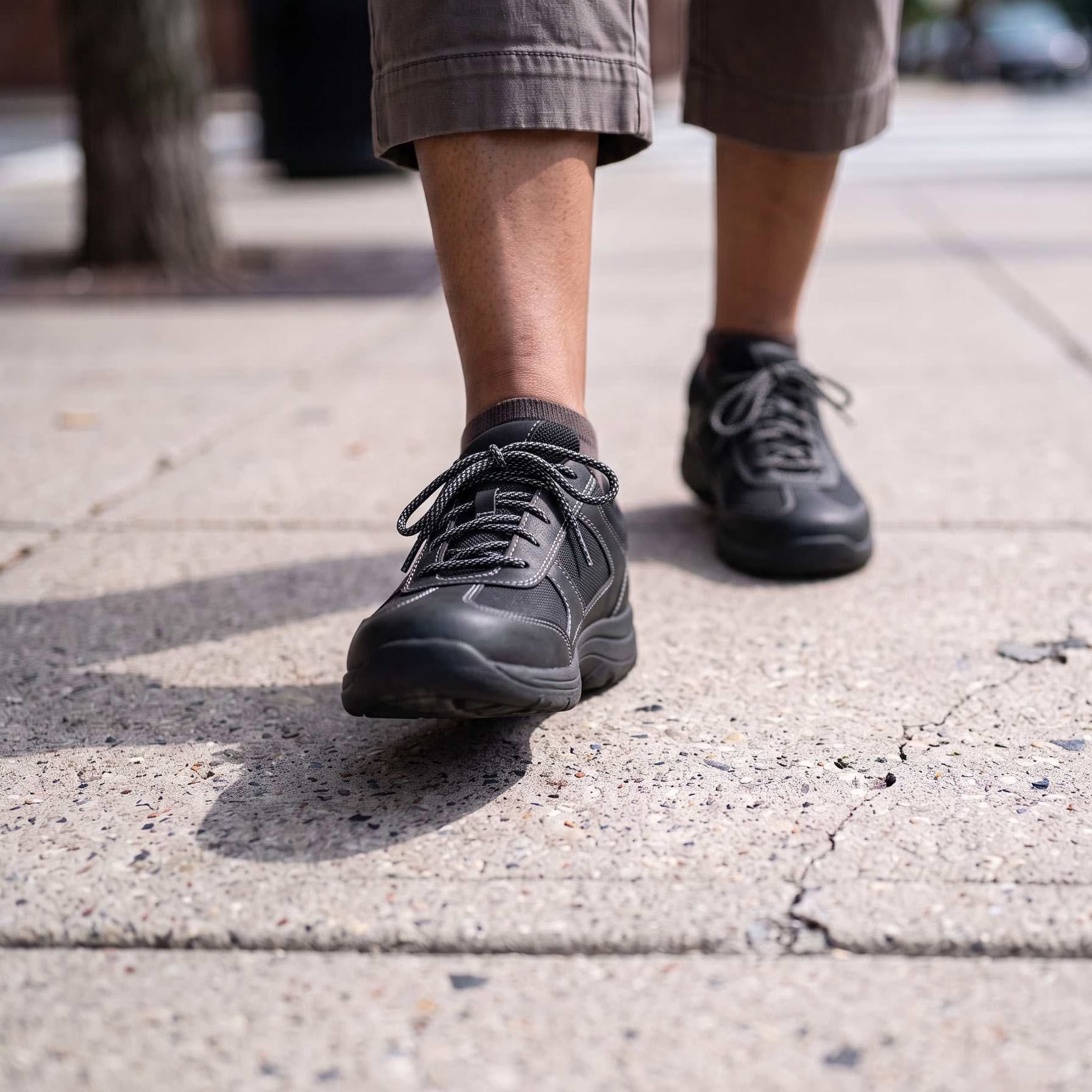
Walking requires coordinated movement through the feet, ankles, knees, hips, pelvis and spine. When one part of that system stops contributing normally, another part often has to do more.
In this example, the right side has been taking up the slack for the dysfunctional left side. With every step, it works harder. Over weeks, that compensation may produce right buttock pain and contribute to symptoms elsewhere in the lower extremity.
The right side hurts—but the right side may not be where the problem began.
Treat the Dysfunction, Not Just the Pain
Once the mechanical problem is recognized, treatment can be directed toward restoring more normal function. Depending on the individual examination, this might include osteopathic manual treatment, gentle traction of the affected lower extremity, an appropriately fitted sacroiliac belt, stretching of shortened muscles, and rehabilitation of normal movement and walking mechanics.
The important point is not that every fall produces an upslip, or that every case of buttock pain has this explanation. They do not.
The lesson is broader.
A fall can alter the mechanics of the body even when there is no fracture or obvious injury. Symptoms may not appear immediately, and they may eventually develop somewhere other than the original site of impact.
That is why a detailed history and comprehensive physical examination remain so important.

At Physicians’ Back Institute, we do not examine only the part that hurts. As board-certified medical doctors with extensive training in osteopathy, we evaluate the entire body through the osteopathic lens, looking for relationships between structure, movement, compensation, and symptoms.
Sometimes the most important clue to today’s pain is something that happened weeks—or even months—before.
Finding the Cause. Restoring Function.